How Many Countries Have You Visited?
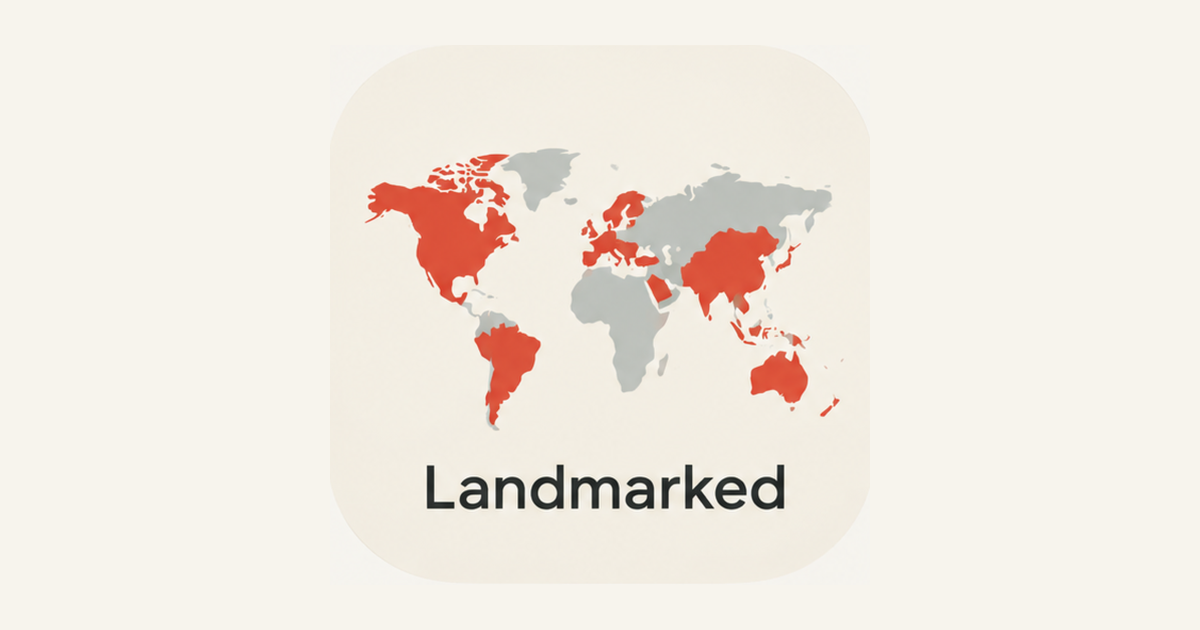
A country count is a simple number with a lot of small decisions hiding inside it. Make those decisions once, then keep a record that can grow.
What you are counting
Most people start with the 193 member states of the United Nations. That is a clean list, and it is the one travel communities usually mean when they say “how many countries.” It is not the whole picture. Taiwan, Kosovo, Palestine, the Cook Islands, Niue, Vatican City and a handful of others sit outside that 193, and people who have been there usually want them on the list. Pick a list and write it down. Changing the rules later makes last year’s number hard to compare with this year’s.
A useful extra column is “territories I also count”: Greenland, Puerto Rico, Bermuda, French Polynesia, Hong Kong, Macau, Curaçao. They are not UN members. They are also not “just another city.” Keep them in a second tally if you care about them, rather than inflating the country number.
What counts as a visit
This is where two honest travellers get different totals. Decide, for yourself:
- Does an airport layover count? A common rule is no, unless you cleared immigration and went into the country.
- Does a drive across a border for lunch count? If you were there, you were there. A short visit is still a visit.
- Does a cruise port count? If you got off the ship, most people say yes.
- Does childhood count? Yes. The map is a record of your life, not only of trips you booked yourself.
Write the rule in one sentence and stick to it. The point is not to win an argument. It is to keep a number you still believe in ten years from now.
How to keep the list
A notes app with country names is enough to start. It fails when you want to see the shape of the trips: which years, which regions, which gaps. A spreadsheet is better. Columns that hold up: country, first year, last year, cities or regions, and a yes/no for “I would go back.” Sort it by year and you have a timeline. Sort it by continent and you see where you have never been.
The list still has no geography. A map does. Colouring countries on a wall map or a scratch poster is satisfying, and it is almost impossible to keep up to date once you travel more than a few times a year. A digital map you stamp yourself does the same job without the poster getting out of date.
Countries are not the only unit
Colouring France after a weekend in Paris hides everything you have not seen. Splitting a country into regions — states, provinces, autonomous communities — keeps the country count honest and still lets a long trip in one country show up. That is how Landmarked is built: you stamp a region, and the passport rolls those stamps up into countries and coverage.
If you only want a country number, count a country as visited when any region in it is stamped. If you want a harder game, wait until you have a stamp in more than one region, or until you have been in the capital and somewhere that is not the capital.
Reading the number
Thirty countries can be thirty airport hops, or thirty slow trips. The number is a headline. Dates, photos and a note on the place are what make the headline mean something when you open the map in ten years. Keep the count. Keep the days too.
Stamp regions on Landmarked and the passport counts the countries for you. The walkthrough is the short version of how a stamp works.
More guides
How to Create the Ultimate Travel Bucket List
Turn a pile of “someday” places into a list you can actually travel from.
10 Creative Ways to Track the Countries You Have Visited
From scratch posters to digital maps, and what each method actually keeps.
How to Keep Your Travel Memories Organized
Photos, dates, notes and maps in one place, instead of a camera roll you will never search.